▪️Push notifications

Push notifications are one of the very few offline but successful communication channels that could bring you very good conversion rates in no time. As a great channel, it is also a special one, since it is requiring special permission prior to being able to use it within campaigns.

How do push notifications work?

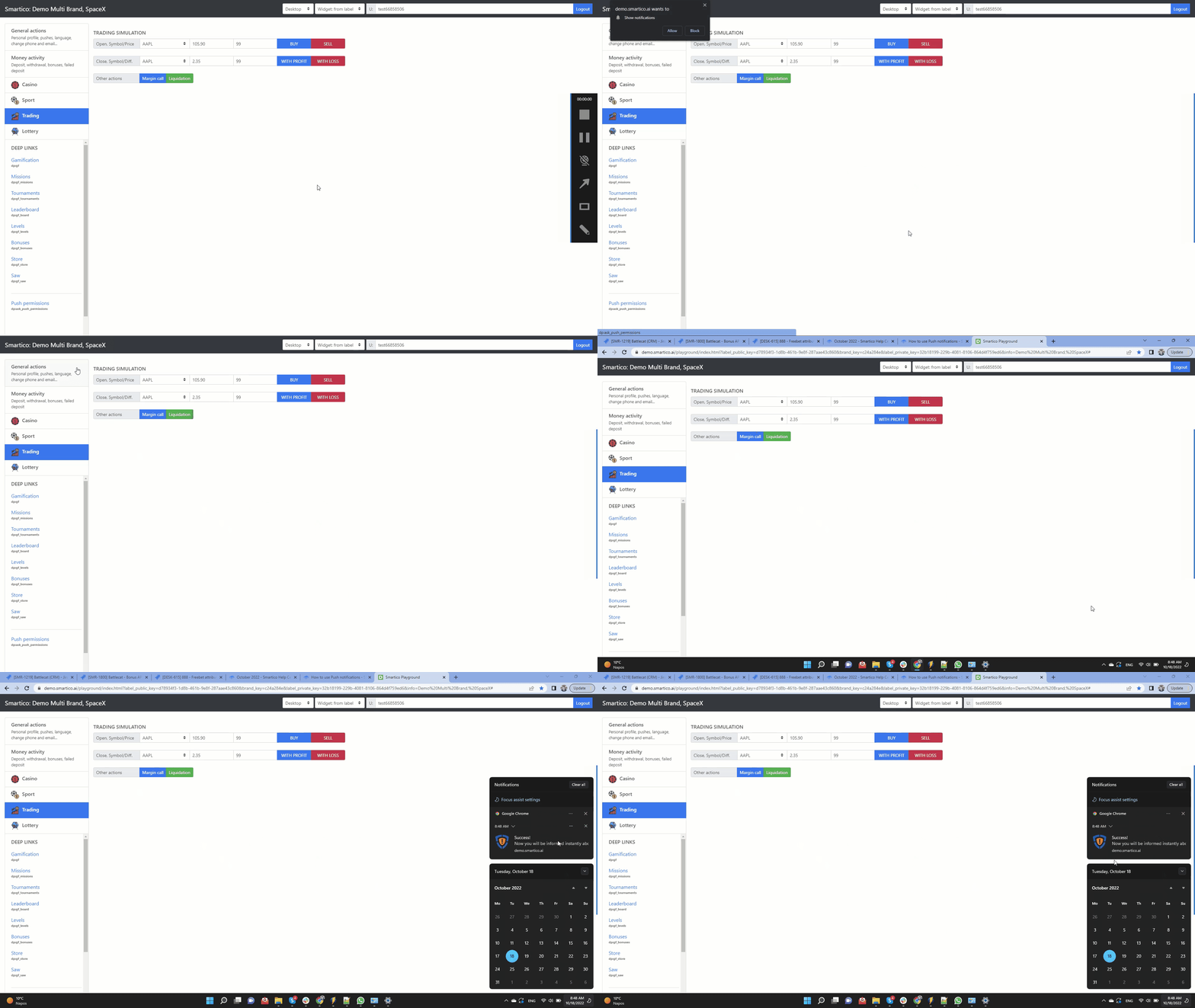
In order to be able to send push notifications to the end user, we first need to get permission to do so. The permissions are requested in the web browser and as soon as the user gave them, Smartico will mark the user as reachable for the push notifications.

Every user could control the Push allowance from the user's browser. The push status could have 3 possible options:

  • Ask - the user wasn’t asked yet to give permissions (default status)

  • Allowed - in this case, the push message could be sent, the user gave permissions

  • Blocked - in this case, the push messages are not allowed, the user blocked permissions

  • Browser Not Supported – The user's browser does not support push notifications, or they are blocked at the system level.

  • Suspended – The user initially granted push notification permissions but later logged in with a different account. In this case, the push permissions and token are reassigned to the newly logged-in user, and the previous user’s status is set to "Suspended."

Gamification: Enabling push with pop-up trigger
Request permissions to send pushes

To start using our push services, you will need to build a Journey campaign that prompts the user to grant push permissions.

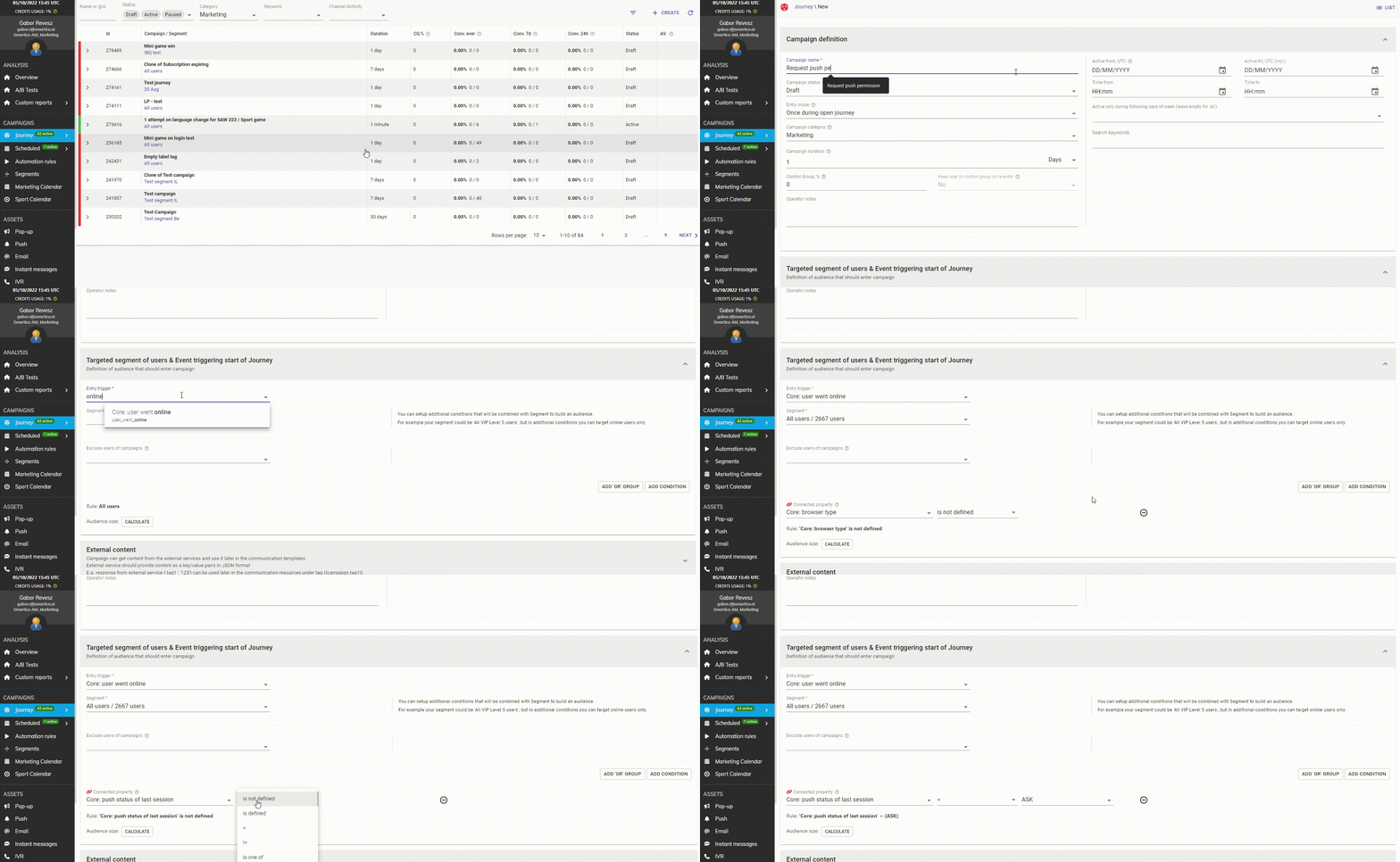
This campaign should address only users who have “Push status of the last session” set to “Ask”, this means that the browser is supporting push permissions and we didn’t ask this user yet. This way, we exclude those who have already granted permissions and those who have blocked them.

BO: Setting campaign to request push permissions
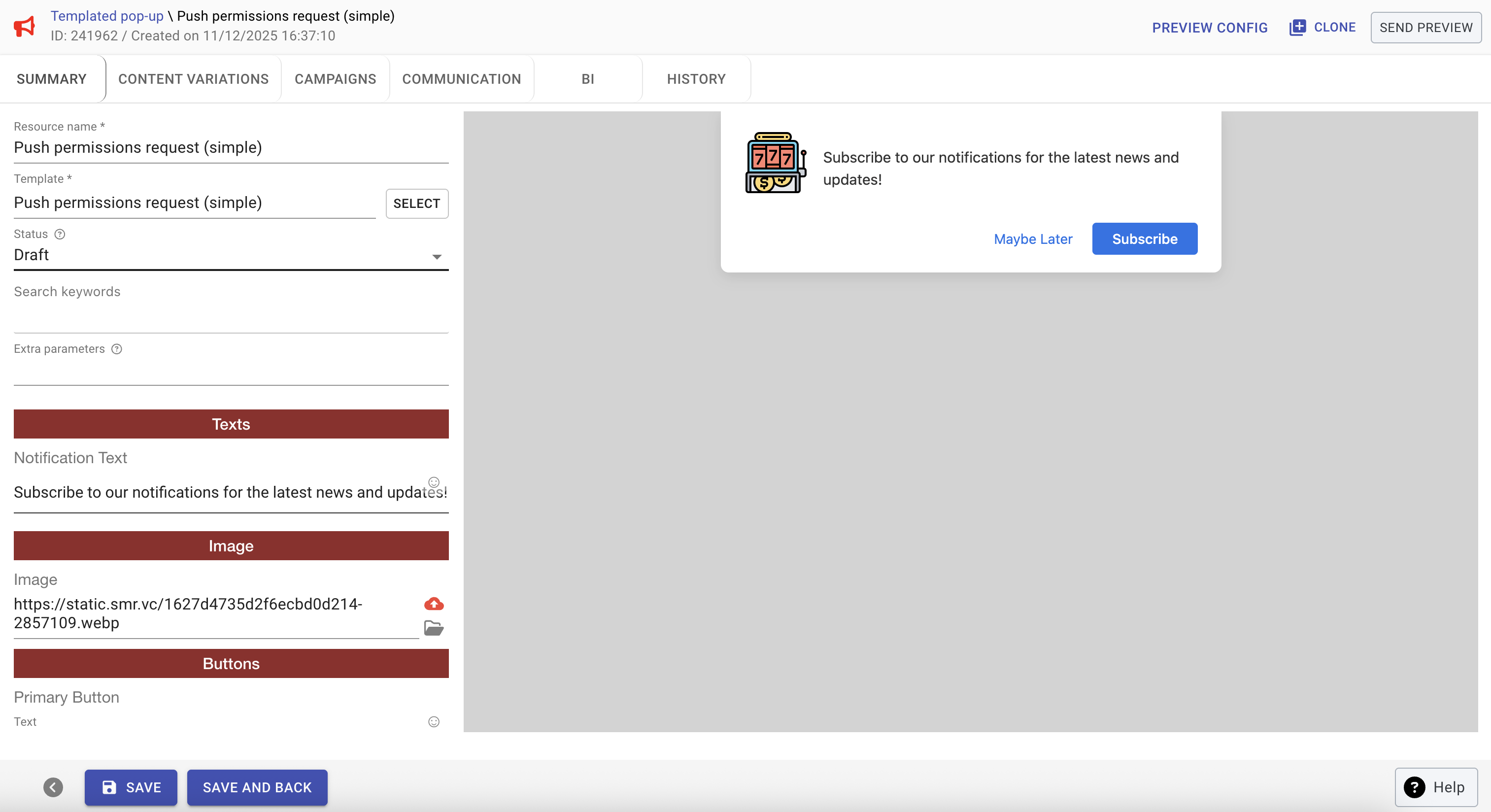
In the campaign, you need to show a pop-up to the end user, giving the proposition to subscribe to push notifications. This is usually referred to as “soft onboarding".

Soft onboarding popups

We have two pop-up templates dedicated to push permission soft onboarding.

Simple pop-up for soft onboarding

The template for this pop-up is called "Push permissions request (simple)".

This pop-up is not modal; it appears from the top of the screen and does not block the user from interacting with your site. You can customize the image, text, and titles of the buttons.

Popup with categories

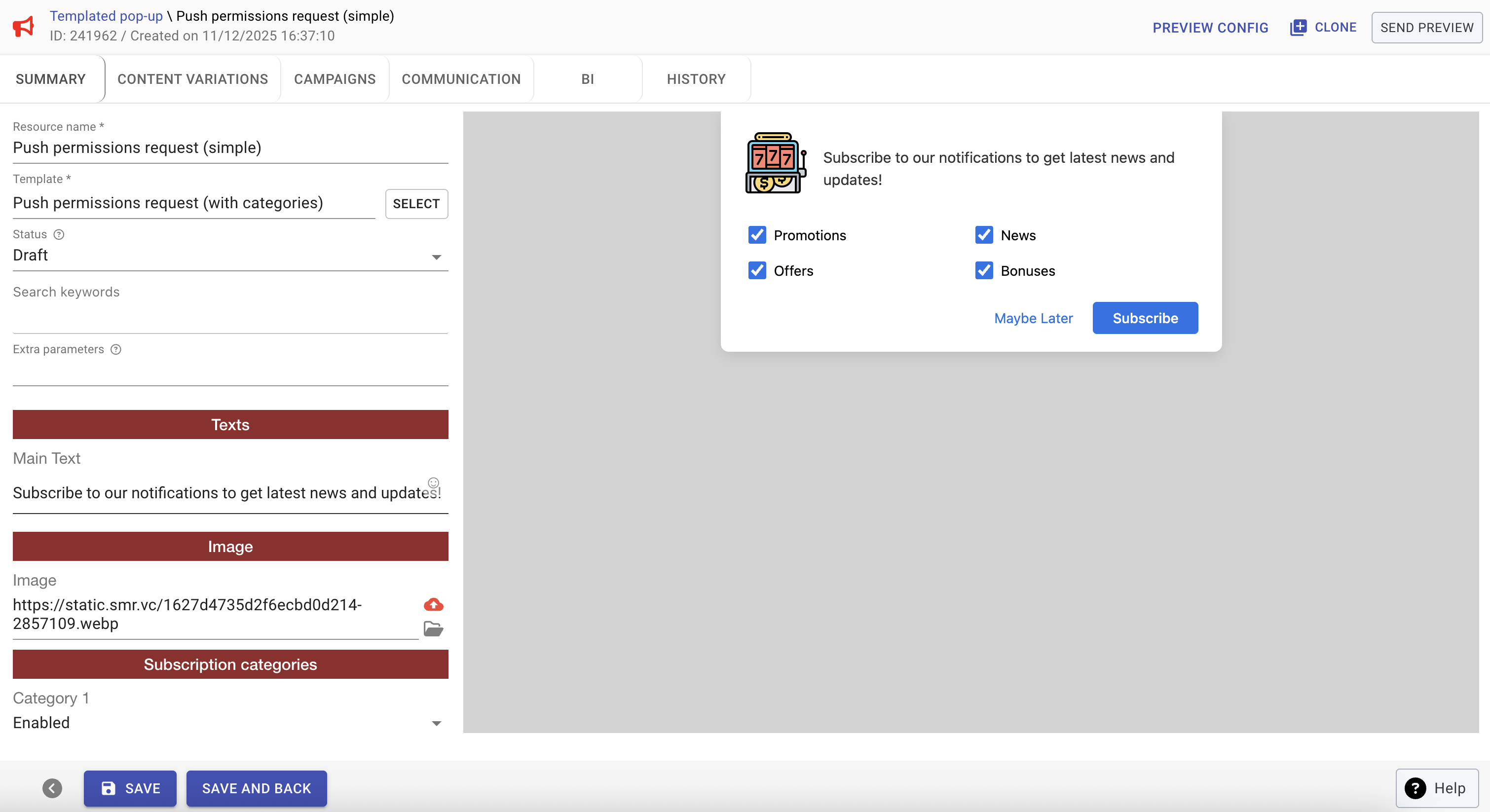
The template for this pop-up is called "Push permissions request (with categories)".

This template has the same customization options as the simple one, and you can also customize the categories users can subscribe to.

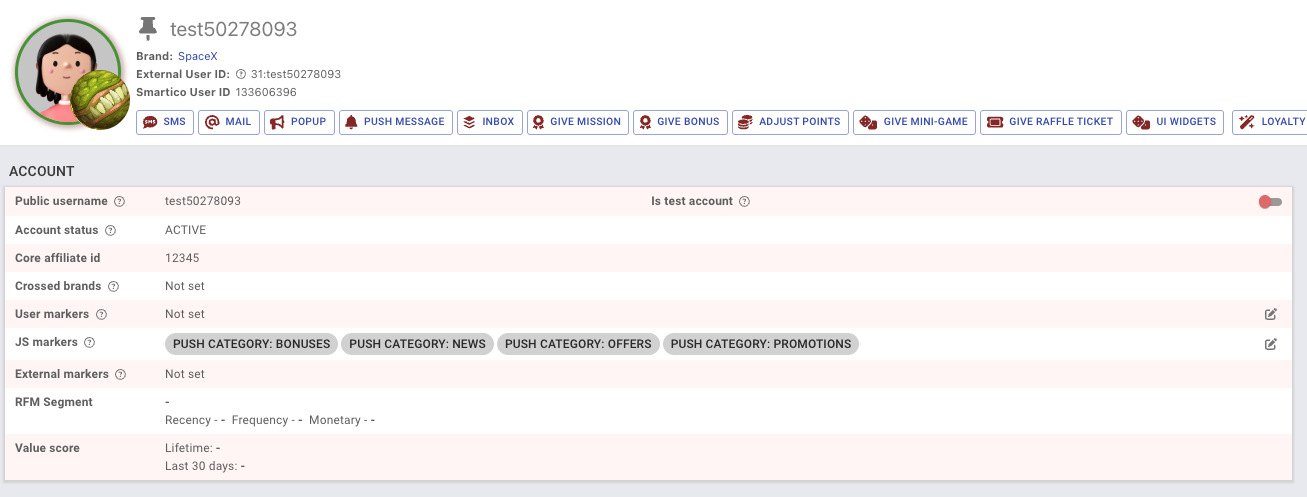
Each user's choice will be preserved in the JS Markers, which are available for segmentation.

Later, you can build a campaign targeting users who have been granted permissions and subscribed to the specific category.

Flow after the soft onboarding.

If the user clicks “Maybe later” at this point, you can ask him again later.

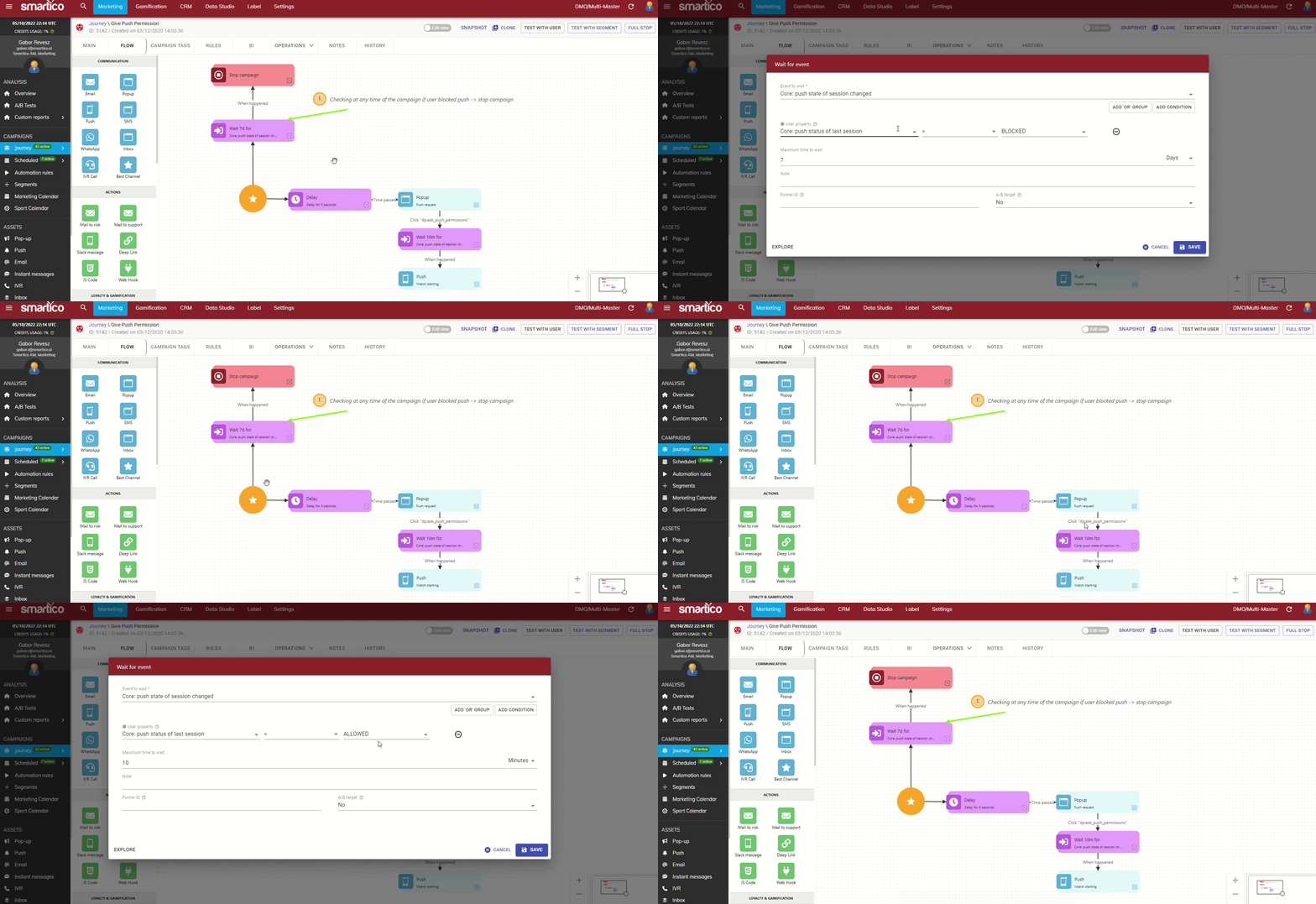
As soon as the user clicks “Subscribe” in the pop-up, we will trigger the browser's permission request. From this point, most of the users will make a choice that will lead either to “Allowed” or “Blocked”

BO: Full flow of the campaign, sending 1st push message as soon as user gives permission
Once push permission is granted, you can attempt to execute a push as part of the flow.

How to segment users that can be addressed with Push notifications

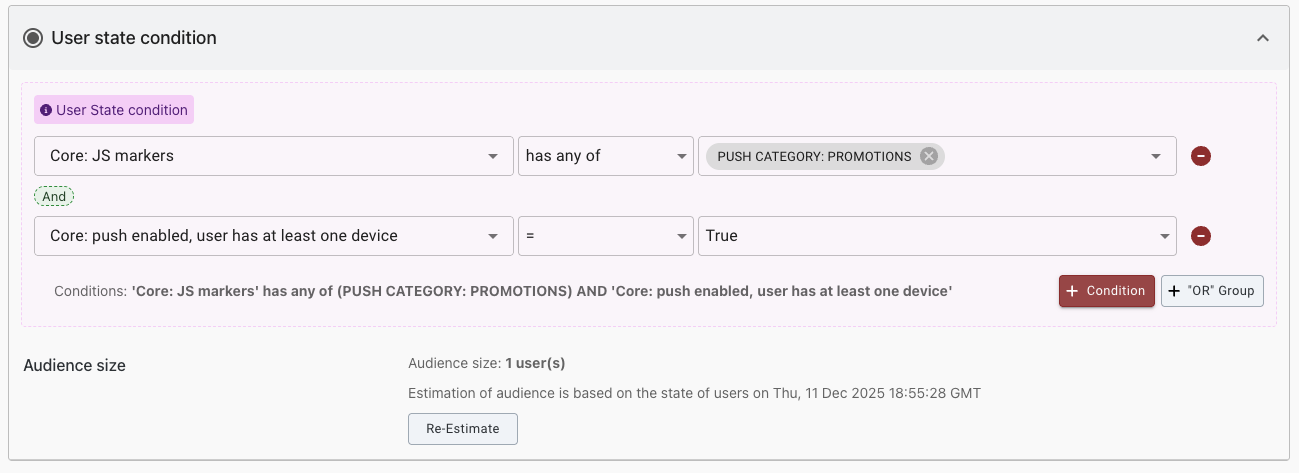
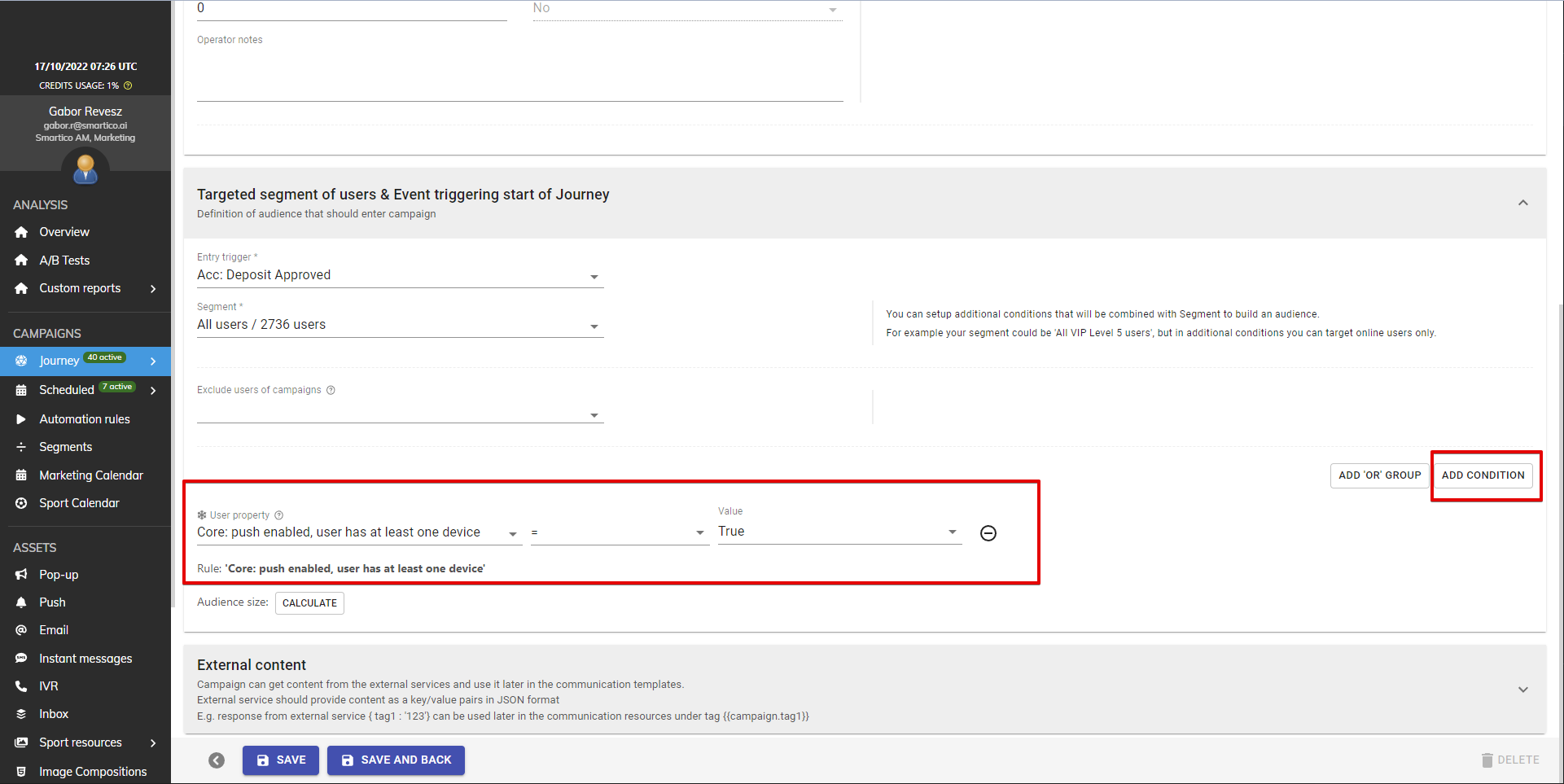
To send push notifications to users, you will need to first identify users who have granted permissions. Create a segment with "Core: push enabled, user has at least one device" = true.

BO: Condition setup for enabled push

Following that, the creation of a flow should be handled regularly. In case you have any further questions regarding this topic, please don`t hesitate to contact your Customer Success Manager.

Managing push notification resources

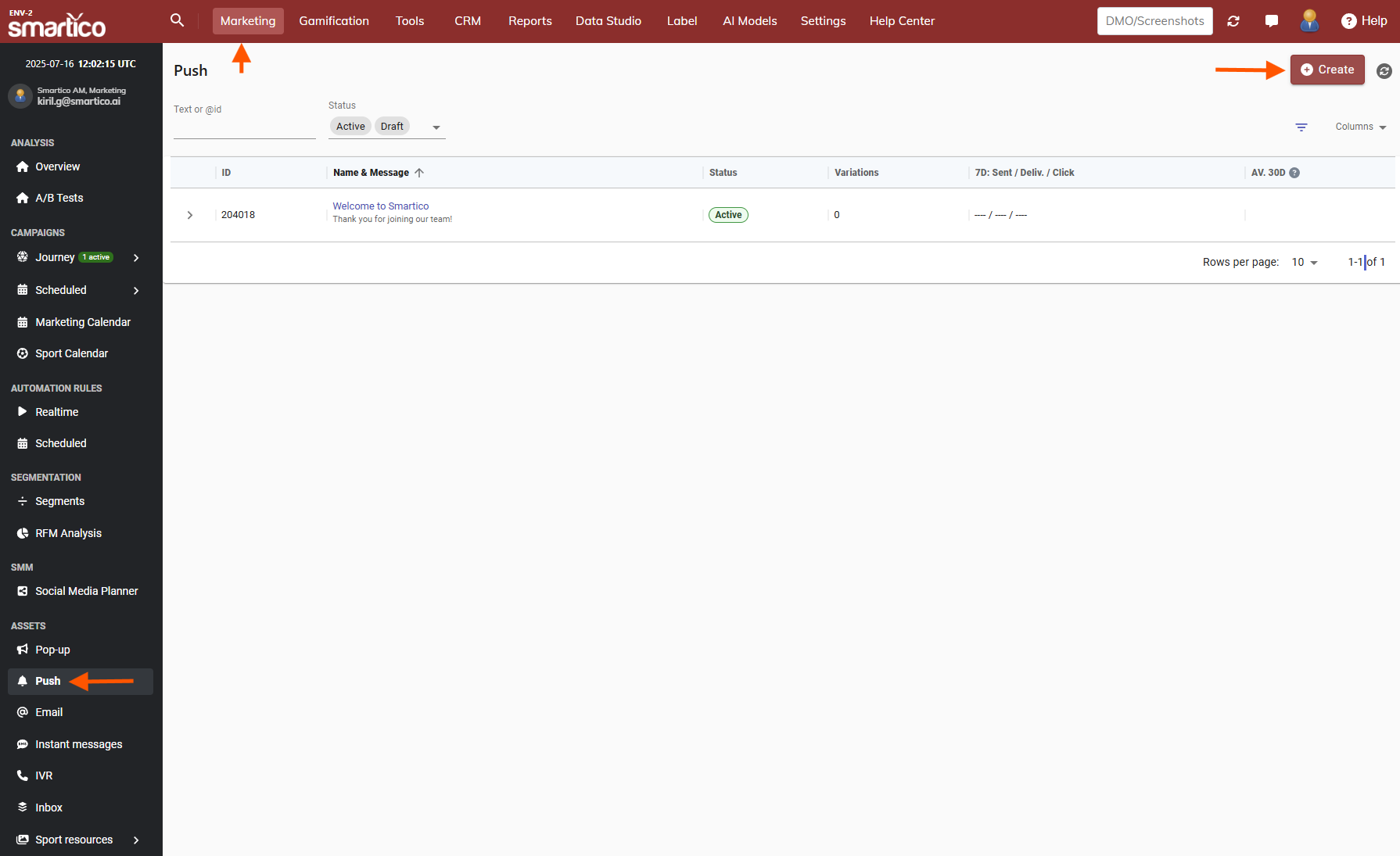
  1. Navigate to the Marketing tab -> Assets -> Push

  2. Click on the Create button

BO: List of created Push messages
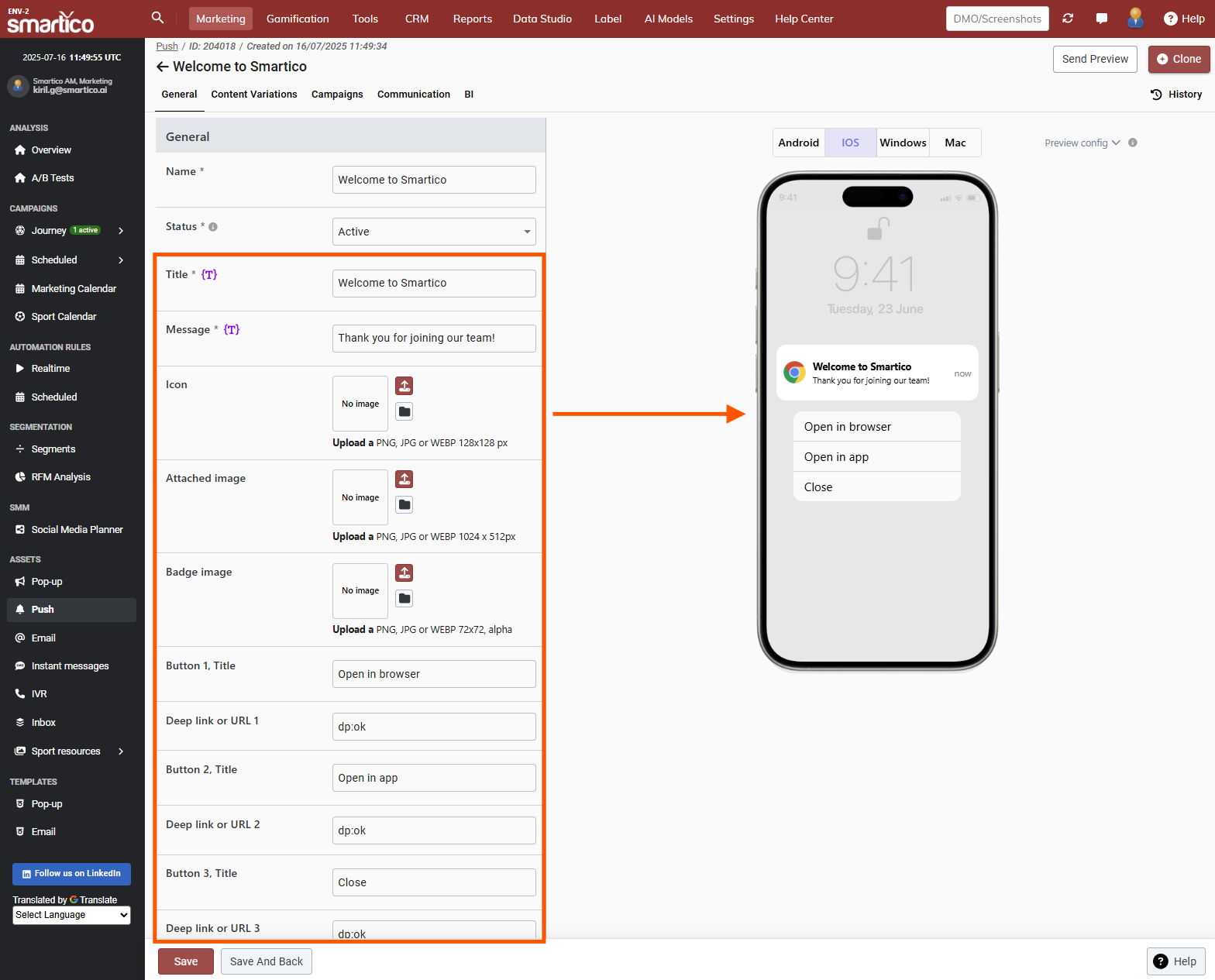
  1. Firstly, choose the Resource name (recommended to reflect the most possible usage).

  2. Add Title, Messag,e optionally icon, attached image, or even buttons

BO: Push General setup

Use popup for communication of:

  1. Promotions

  2. Invitations

  3. Announcements

  4. Alerts

and many more!

As dynamic as possible, within all resources, also pushes supporting content variations, labels, and state tags. For more information, check out our article. Content Variations

Target Devices

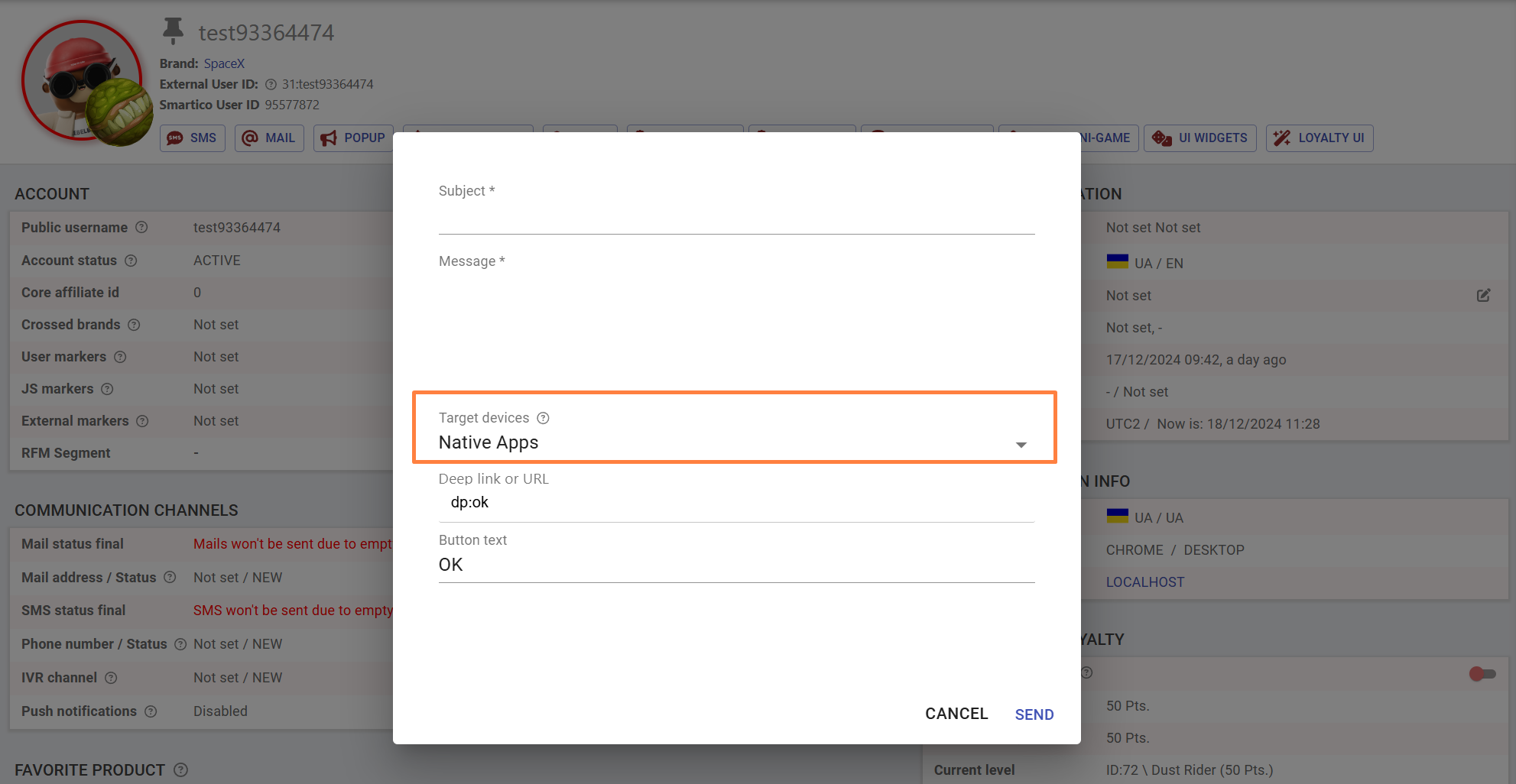
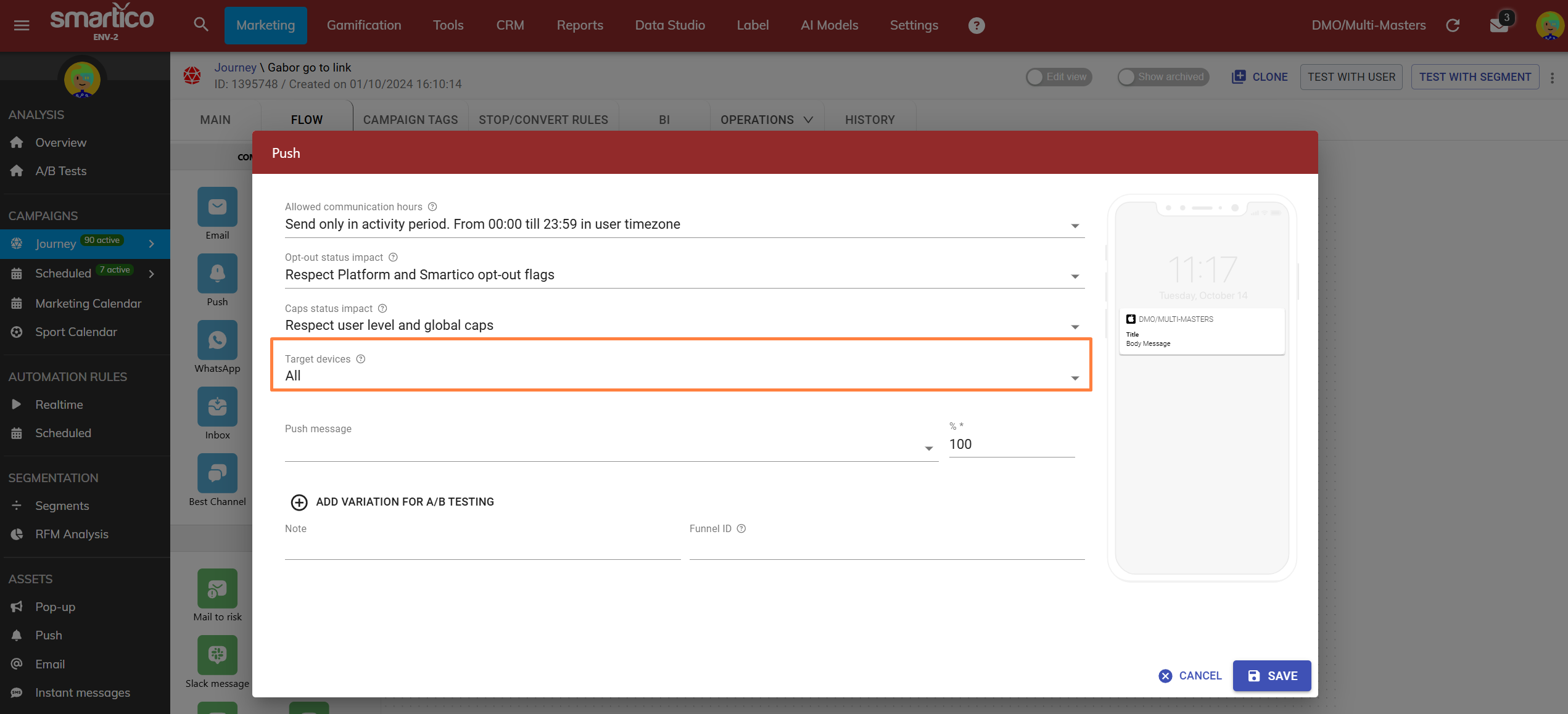
The 'Target devices' setting allows you to choose the type of app to receive the notifications:

  • Native apps

  • Web

  • All

You can configure this setting in the Campaigns Flow Builder or directly in the User Profile page of a player.

To ensure web Push notifications are received on iOS 16.4 and later:

  • Users should install the Web App to Home Screen (mandatory for full push support):

    • Web Push notifications work only if the user installs your website as a PWA (via "Add to Home Screen" in Safari).

    • The Web Push API does not work directly in Safari browser tabs; it requires installation on the Home Screen.

To receive push notifications on macOS Ventura 13.0 and later (Safari 16+):

  • The website does not need to be installed as a PWA. Users can request permission directly inside Safari.

BO: Profile page - Target devices
BO: Campaign - Target devices

Last updated

Was this helpful?