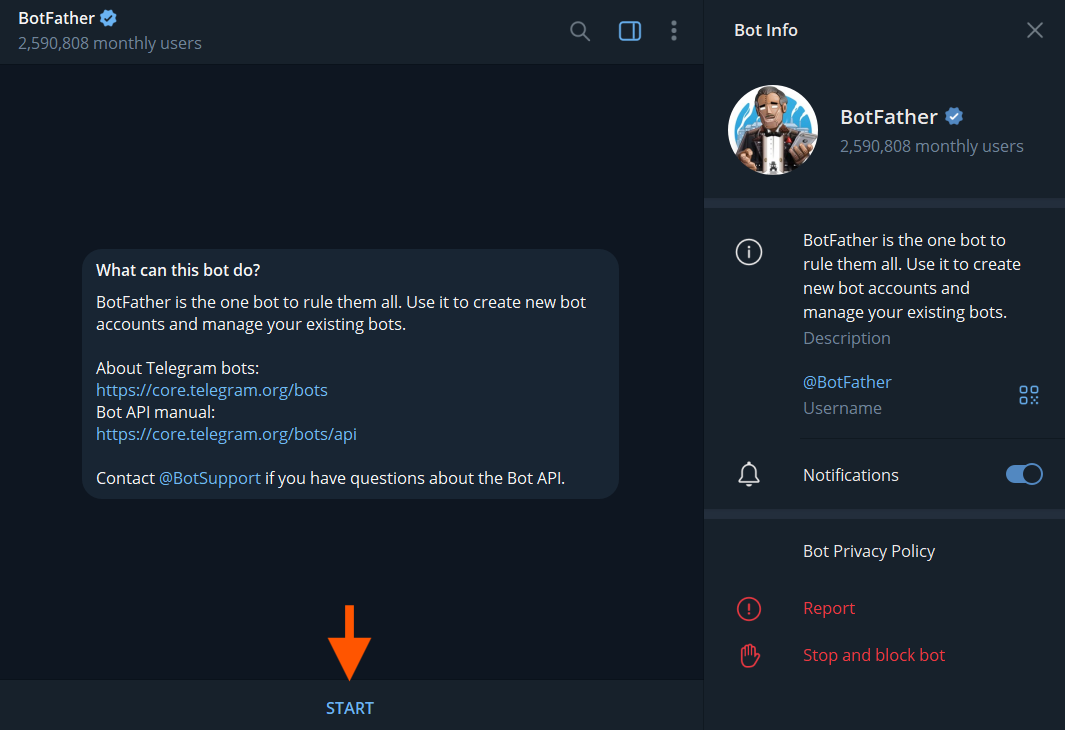

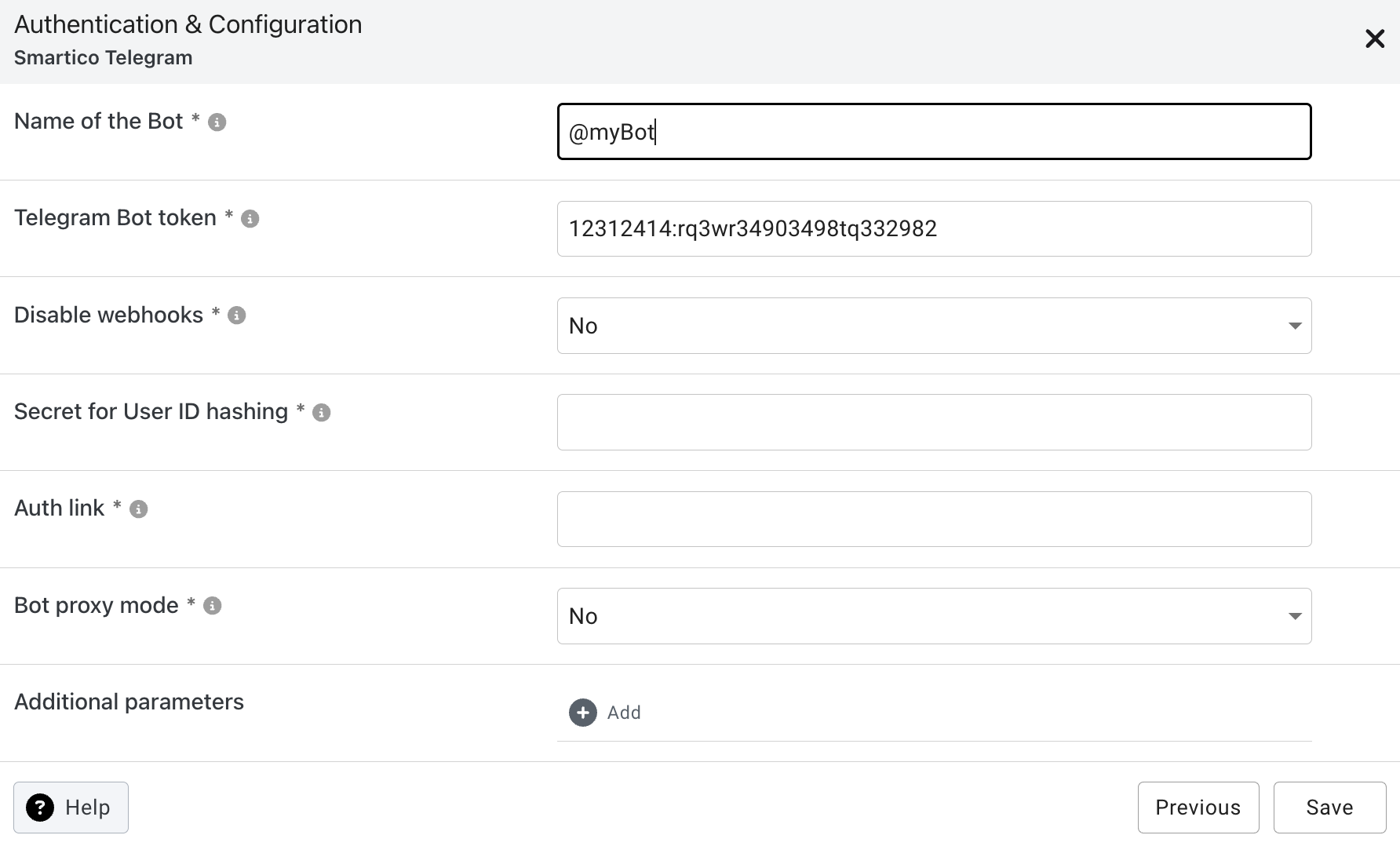
.png?alt=media)
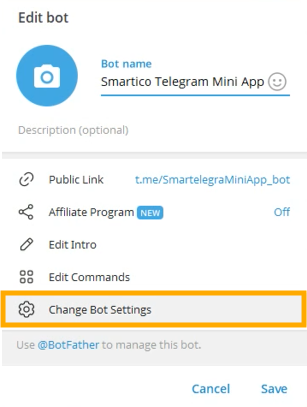
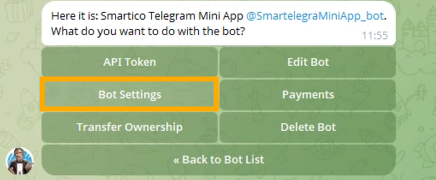
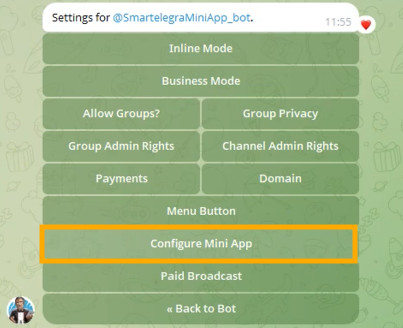
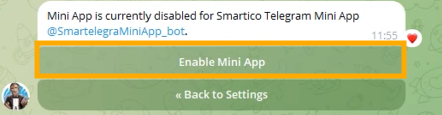
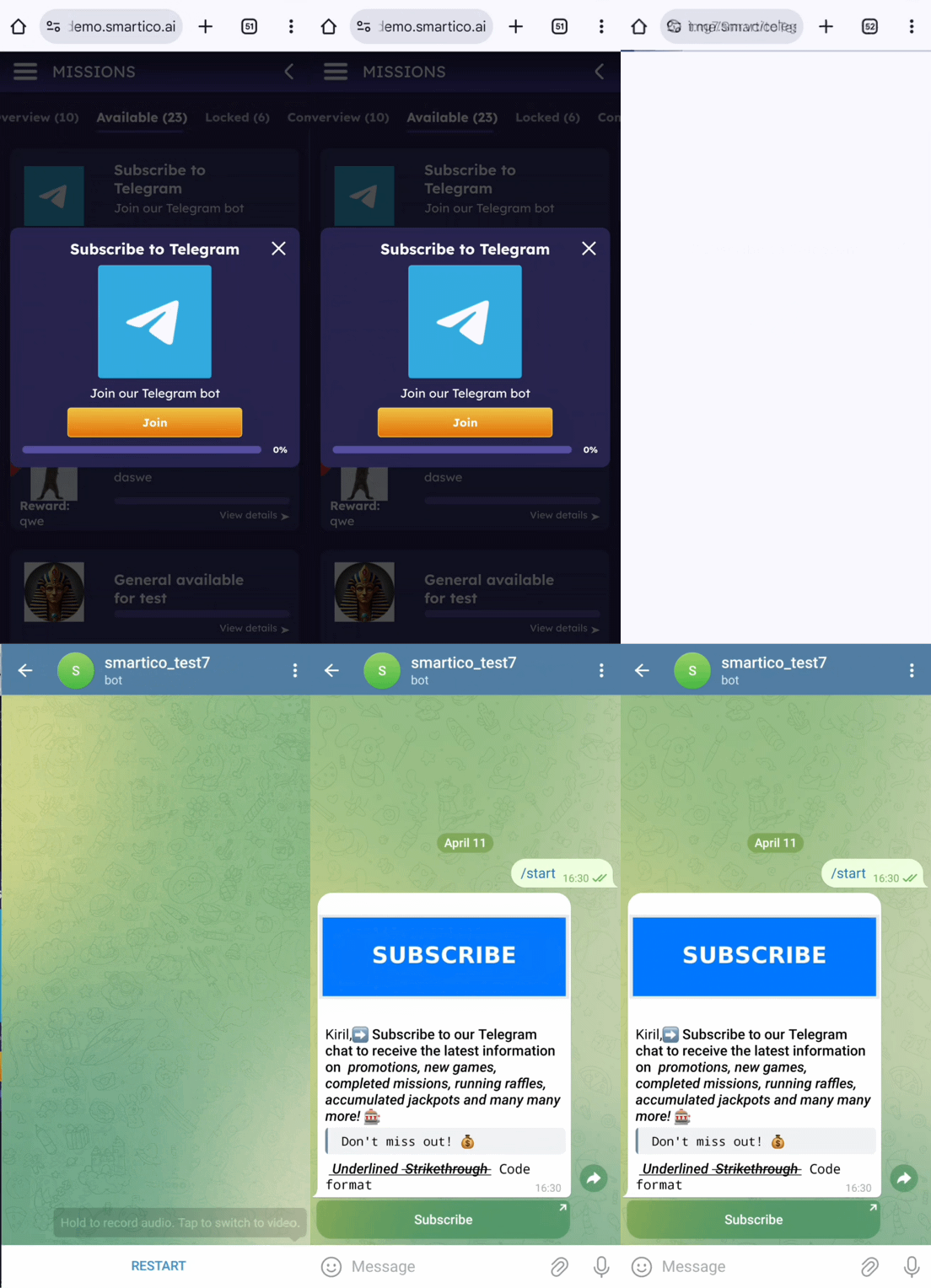


CRM User profile, telegram chat ID and telegram user name

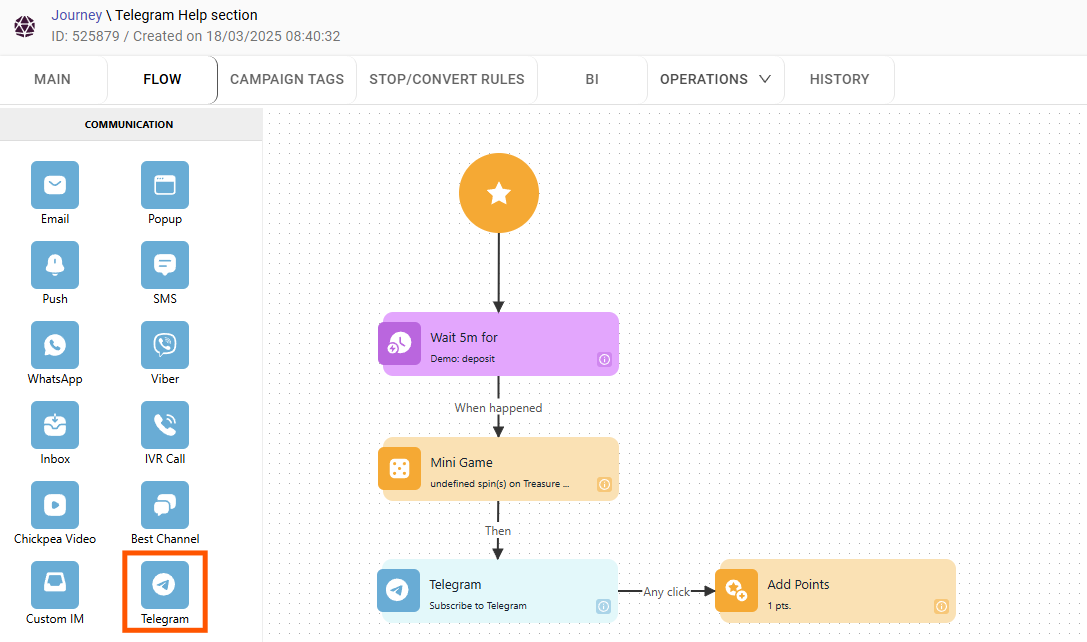
Example of campaign that is started when user is joining telegram bot
, but they are not supported** A: Telegram has a limited set of support HTML tags. To achieve a new line you can put an empty \
\pair of tags **Q: How are delivery/impressions/clicks tracked in reporting for Telegram messages?** A: Telegram as a platform does not provide information on whether the message was delivered or seen by the user, though on the Smartico side, we have only information like * Created - first fact, indicating that communication is created by activity in the campaign * Sent - the fact that communication was dispatched to the Telegram bot API * Failed - failed to deliver the message * Click - user clicked on the link to the button in the message Note: because Telegram sends no delivery receipt, the Delivered status and delivery rate shown for Telegram in campaign reports are not a true delivery measure. A message is marked Delivered only once one of its tracked links is opened. Messages that are never clicked stay without a Delivered status, so reports or exports that filter on "Delivered" will under-count Telegram recipients. Use Sent minus Failed as the closest equivalent of delivered messages. **Q: What happens if the user blocks and then unblocks the bot?** A: When unblocked, the user needs to click /start again and complete the authentication step the bot offers (or use the `dp:telegram` deep link again). Once authentication completes, the `core_telegram_auth` event fires again and the chat ID is updated. **Q: Can I send images in Telegram messages?** A: Yes. Smartico supports four content types for Telegram message assets: Text/HTML, Image/Photo (JPEG, PNG, WEBP), Video (MP4 with streaming support), and Animation (GIF/MP4). All media URLs must be publicly accessible HTTPS links. **Q: What's the maximum message length?** A: Text-only messages: up to 4096 characters. Messages with media captions (Photo, Video, Animation): up to 1000 characters (enforced by Smartico message delivery). **Q: Can you explain the events that are sent when a user joins/leaves the Telegram bot?** **core\_telegram\_auth -** happens when the user joins the bot ```json { "core_telegram_chat_id": 123456789, "core_telegram_user_name": "john_doe" } ``` **core\_telegram\_unsubscribed** - when the user leaves the bot ```json { "core_telegram_chat_id": null, "core_telegram_user_name": null } ``` **Q: Which HTML tags are supported?** A: Telegram supports limited HTML: ``, ``, ``, ``, ``, ``, `
`, ``, ``

**Q: What happens if a campaign sends a Telegram message to a user who is not subscribed?**

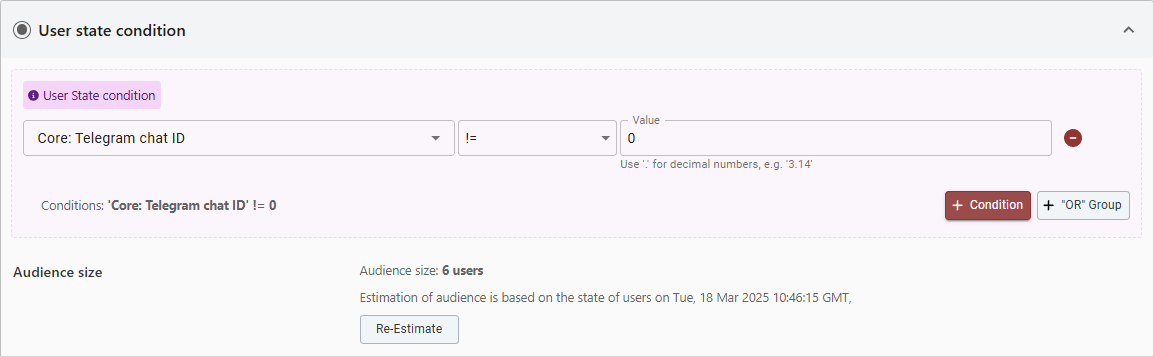
A: If a player does not have a linked Telegram account (the user's Telegram chat ID is missing or 0), the Telegram send activity will fail. In journey flows, always use a segment condition (Telegram chat ID > 0) or add a Check User Profile activity before the Telegram activity to ensure the player is subscribed before sending.

**Q: How can I prevent my Telegram bot from being banned or deleted by Telegram?**

A: Telegram uses automated anti-spam algorithms that monitor newly created bots and accounts. To avoid rapid bans:

* Do not immediately launch mass marketing campaigns or reward missions from a newly created bot.
* Gradually ramp up subscriber volume and message sending over several days rather than blasting thousands of users on day one.
* Ensure users explicitly initiate interaction with the bot first via deep-link opt-in (`dp:telegram`).
* Adhere to Telegram's rate limits (approximately 30 messages per second per bot) to prevent delivery errors.

**Q: How do users unsubscribe from the Telegram bot, and when is their chat ID removed?**

A: Users unsubscribe by blocking the bot in Telegram. Smartico does not add an unsubscribe link or a stop command to Telegram messages. When a user blocks the bot, Smartico triggers "Core: telegram unsubscribed" and clears the chat ID and username. The same happens when a send fails because the user blocked the bot or deleted their Telegram account. If a send fails with "chat not found", the "Core: telegram unsubscribed" event is still triggered, but the chat ID is kept.


---

# Agent Instructions
This documentation is published with GitBook. GitBook is the documentation platform designed so that both humans and AI agents can read, navigate, and reason over technical content effectively. Learn more at gitbook.com.

## Querying This Documentation
If you need additional information that is not directly available in this page, you can query the documentation by asking a question.

Perform an HTTP GET request on the following URL with the `ask` and `goal` query parameters:

```
GET https://help.smartico.ai/welcome/products/crm-automation/activities-of-flows/activity-telegram-bot.md?ask=&goal=
```

`ask` is the immediate question: it should be specific, self-contained, and written in natural language.
`goal` is what the user is ultimately trying to achieve, the reason they need the answer. Sharing it helps GitBook give you a better, more relevant answer. A goal is most helpful when it describes the outcome the user wants rather than restating the question. For example, with `ask=how do I create an API token`, a goal like `automate deployments from our CI pipeline` lets GitBook tailor the answer to that use case.

The response will contain a direct answer to the question and relevant excerpts and sources from the documentation.

Use this mechanism when the answer is not explicitly present in the current page, you need clarification or additional context, or you want to retrieve related documentation sections.